FSSC 22000 Certification in Malaysia
Quick answer
- FSSC 22000 combines ISO 22000, the ISO 22002-x prerequisite programmes for your product category, and FSSC’s own additional requirements into one GFSI-recognised food safety certification.
- Version 7 took over from Version 6 in May 2026. A V6 audit can still be booked until 30 April 2027, but every certificate must be upgraded to V7 by 30 April 2028.
- IAS Malaysia certifies FSSC 22000 under IAS’s accreditation from UQAS (Universal Quality Accreditation Service). That’s a separate accreditation from JAS-ANZ, which belongs to a different group entity.
- FSSC 22000 exists alongside halal certification, not in place of it. Food manufacturers in Malaysia typically hold both, issued by two entirely different bodies for two different purposes.
- EAS, IAS’s training partner, runs the Lead Auditor course under CQI-IRCA approval and the Internal Auditor course as its own in-house programme.
Malaysia’s processed food sector runs on palm oil derivatives, halal-compliant supply chains, and export relationships with the Gulf, Europe, and the wider ASEAN region. Buyers in every one of those markets increasingly want proof first: a GFSI-recognised food safety certificate on file before halal status even comes up. FSSC 22000 is that certificate. It’s a scheme built on ISO 22000, sector-specific prerequisite programmes, and FSSC’s own additional requirements. Because GFSI benchmarks it, a certificate from one accredited body gets accepted at face value by buyers anywhere. IAS Malaysia certifies to the current FSSC 22000 Version 7, released in May 2026, and guides existing Version 6 holders through the transition on a fixed timetable. This page sets out what the scheme actually requires and what moved between V6 and V7. It also covers who in Malaysia’s food manufacturing base should be certifying, how an IAS Malaysia audit runs end to end, and how FSSC 22000 sits alongside — not instead of — halal certification and IAS’s own accredited training arrangements.
What Does FSSC 22000 Certification Actually Cover?
FSSC 22000 is a certification scheme, assembled from three distinct layers rather than one document you could audit against on its own. Layer one is ISO 22000, the food safety management system standard. Layer two is a set of sector-specific prerequisite programmes from the ISO 22002-x series. These set the hygiene and operational baseline for your particular category — palm oil processing, snack manufacturing, beverage bottling, and so on. Layer three is FSSC’s own Additional Requirements, added to close gaps ISO 22000 leaves open. That means food defence against deliberate tampering, food fraud vulnerability assessment, allergen control, accurate labelling, and environmental monitoring for pathogens. The Foundation for Food Safety Certification owns the scheme. Its full GFSI benchmark status is exactly why the certificate travels — a retailer in the Gulf or a brand owner in Europe accepts it without running their own audit.
FSSC 22000 V6 to V7: The Practical Differences
FSSC issued Version 7 in May 2026 and is running the changeover on a staged schedule that closes on 30 April 2028. Nothing about the scheme’s core shape has changed — it is still ISO 22000 plus prerequisite programmes plus HACCP plus the Additional Requirements. What has changed sits inside that frame, summarised here.
| Area | FSSC 22000 V6 | FSSC 22000 V7 |
|---|---|---|
| Prerequisite programmes | ISO/TS 22002-x series | Replaced by the ISO 22002-x:2025 series |
| GFSI benchmark | Mapped to GFSI Requirements v2020 | Remapped to GFSI Requirements v2024 |
| Category breakdown | Broader groupings across the food chain | Split into more granular categories and subcategories |
| Culture requirement | Food safety and quality culture already required | Senior-management involvement now needs clearer, documented evidence |
| Sustainability | Addressed only indirectly | Formal SDG-linked requirements covering food loss, resources, packaging |
| Additional Requirements | Baseline requirements only | Sharper expectations on supplier approval, allergens, food defence, fraud, equipment |
Source: FSSC 22000 Version 7 release notes, Foundation for Food Safety Certification (fssc.com), May 2026.
Most certified sites will find the V7 upgrade is mostly a matter of reorganising paperwork and evidence around the new structure. It rarely means rebuilding the FSMS from scratch.
FSSC 22000 Alongside Halal Certification
Malaysia’s food manufacturers routinely hold both FSSC 22000 and halal certification. It helps to be clear these are two separate certifications, answering two separate questions. Halal certification, issued through Malaysia’s national halal authority, confirms a product and its production process meet Shariah requirements. FSSC 22000, issued by an accredited certification body such as IAS, confirms the food safety management system itself is sound — hazard control, traceability, allergen management, and the rest. Neither certificate substitutes for the other. Buyers in most export markets IAS Malaysia’s clients supply — the Gulf especially — now expect to see both before placing volume orders. This matters most for palm-oil-derived ingredients and processed food products, where food safety and halal status both carry real commercial weight.
Who Should Certify to FSSC 22000?
The scheme covers the entire food value chain, not manufacturing alone. IAS Malaysia certifies organisations including:
- Palm oil refining and processed food manufacturers producing snacks, oils, and packaged food for domestic and export markets.
- Food and beverage manufacturers across most categories, including bakery, confectionery, dairy, and ready-to-eat products.
- Manufacturers of food-contact packaging that supply the sectors above.
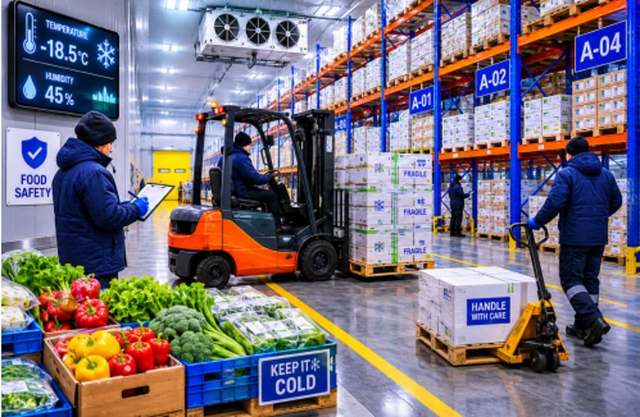
- Cold-chain storage, distribution, and logistics operators moving perishable goods through the supply chain.
- Catering, food-service, and retail-supply businesses serving institutional or major-retailer accounts.
- Feed and ingredient producers supplying manufacturers further down the chain.
Transitioning from V6 to V7: Key Dates
| Milestone | Date |
|---|---|
| FSSC 22000 V7 published | May 2026 |
| Last date a V6 audit can be booked | 30 April 2027 |
| V7 upgrade audit window | 1 May 2027 – 30 April 2028 |
| Deadline — every certificate must be running V7 | 30 April 2028 |
An existing V6 certificate does not expire the moment V7 became current. It stays valid right up until you upgrade it. IAS Malaysia recommends folding the upgrade audit into whichever surveillance or recertification date is already on your calendar, rather than running it as a stand-alone project. Start with a gap review against the ISO 22002-x:2025 prerequisite set. Then refresh your culture, allergen, food-fraud, and sustainability records to match, and walk your internal auditors through what changed before the assessor arrives. Leaving the upgrade to the last few months of the window leaves very little room to fix a nonconformity if one comes up.
The IAS Malaysia Certification Process, Start to Finish

- Enquiry and quote — IAS Malaysia reviews your category, site count, and risk profile before pricing the audit.
- Gap analysis (optional) — an early check against FSSC 22000 V7 while there is still time to close any shortfall.
- Stage 1 audit — a paperwork and readiness review confirming the FSMS is ready for an on-site visit.
- Stage 2 audit — the on-site assessment itself: HACCP verification, PRP records, traceability testing, and the Additional Requirements checked against actual practice.
- Corrective action, where raised — nonconformities are closed and evidenced before a certificate is issued.
- Certificate issued for a three-year cycle, maintained through the surveillance schedule covered further below.
“In my experience, most nonconformities in a Malaysian food plant trace back to allergen cross-contact controls that look fine on paper but haven’t been walked through on the actual line,” says Dr. C.D. Mohana Priya, ISO 22000:2018 Lead Auditor. “Walk your own line the way an auditor would before Stage 2, not after.”
A site with a reasonably mature FSMS can typically reach certification within a few months of first enquiry. One building an FSMS from a standing start should plan for a longer runway. IAS Malaysia confirms a realistic timeline only after it reviews your gap-analysis results — not before it has seen your operation.
Documentation You’ll Need
- A food safety policy with visible sign-off from top management.
- HACCP plan and prerequisite programmes mapped against the ISO 22002-x:2025 series.
- Food defence and food fraud vulnerability assessments with documented mitigation steps.
- An allergen management plan matched to your product range.
- Traceability and recall procedures, with records showing a mock recall was carried out.
- Records covering monitoring, verification, internal audits, and management review meetings.
- A food safety and quality culture plan, with the stronger evidence V7 now expects.
- Food loss, waste, and sustainability records where relevant to your category.
Benefits of FSSC 22000 Certification
- Export readiness: many Gulf, European, and regional buyers now treat GFSI-recognised certification as a baseline condition of doing business, along with halal status.
- Fewer product failures: structured hazard analysis and verification reduce the likelihood and cost of a recall.
- Retailer confidence: a GFSI-benchmarked certificate is increasingly the entry ticket for supplying large domestic and regional retail chains.
- Supply-chain trust: a recognised, accredited certificate lets partners and customers trust your controls without auditing you themselves.
- Sustainability proof: V7’s food loss, waste, and resource-use requirements give export buyers concrete evidence for their own reporting obligations.
Accreditation and Training at a Glance
IAS Malaysia treats certification and training as two structurally separate activities. That separation is what protects audit impartiality, an expectation FSSC and GFSI both place on any accredited certification body. Full detail sits on IAS Malaysia’s accreditation page. The two FSSC 22000 courses have their own pages: Lead Auditor training and Internal Auditor training.
| Activity | Delivered by | Accredited / Approved by |
|---|---|---|
| FSSC 22000 certification audit | IAS (Integrated Assessment Services) | UQAS (Universal Quality Accreditation Service) |
| FSSC 22000 Lead Auditor training | EAS (Empowering Assurance Systems), IAS’s training partner | CQI-IRCA (Approved Training Partner) |
| FSSC 22000 Internal Auditor training | EAS, IAS’s training partner | EAS’s own in-house curriculum — CQI-IRCA approval does not extend to this course |
Verified against IAS Malaysia’s published accreditation page (ias-malaysia.com/accreditation/) and EAS’s published accreditation page (eascertification.com/about-us/our-accreditation/), August 2026.
After Certification: Surveillance, Recertification & Scope Changes
An FSSC 22000 certificate is issued for three years. It stays valid only for as long as you keep meeting the ongoing checks that come with it. IAS Malaysia runs an annual surveillance audit throughout that period. FSSC requires at least one of those visits in the cycle to arrive unannounced. Recertification is run to the same depth as the original on-site audit, and IAS schedules it with enough lead time to close out before the three-year certificate lapses.
- A new production line, an added site, or a material change to your process should be reported to IAS Malaysia as soon as it happens. Some changes call for an extension audit to bring the new scope under certification, rather than leaving it uncovered until the next scheduled visit.
- Because halal and FSSC 22000 status often move together commercially, a suspended FSSC certificate can complicate export paperwork even where halal status itself is unaffected. It’s worth flagging to your export team, not just your quality team.
- An unannounced audit follows the same scope as a scheduled surveillance visit. The only difference is that you learn about it on the day, so the FSMS has to hold up without any lead-time preparation.
Why Certify with IAS Malaysia
IAS Malaysia’s auditors assess food safety systems against how a palm-oil, snack, or beverage line operates, not against a generic template. Beyond FSSC 22000, IAS Malaysia also certifies ISO 22000 and ISO 9001. A combined audit lets one site visit close out more than one scheme, instead of scheduling a separate visit for each. Auditor training runs through EAS, a CQI-IRCA Approved Training Partner. That means the competence behind your own internal audits meets an internationally recognised benchmark, not just an internal-only standard.
About the reviewer
Dr. C.D. Mohana Priya trained as a molecular geneticist and now serves as an Associate Professor (Research). Her background spans more than fifteen years: bench microbiology, molecular-diagnostic testing, clinical-lab management, and, more recently, management-system rollouts. Empowering Assurance Systems Pvt. Ltd., headquartered in Chennai, named her Lead Auditor against ISO 22000:2018 and ISO 9001:2015, and separately as Internal Auditor against ISO 15189:2022. She has also implemented ISO/IEC 17025 laboratory systems hands-on. When she audits food safety monitoring and testing records, she brings that same lab-honed scrutiny. She continues teaching ISO management-system classes, both face-to-face and over live video.
Explore More on ias-malaysia.com
- ISO 22000 Certification in Malaysia — the underlying food safety management standard
- ISO 9001 Certification in Malaysia — worth bundling into the same site visit
- HACCP Certification in Malaysia — for hazard analysis at the process level
- IAS Malaysia Accreditation — the complete UQAS-accredited service list
- FSSC 22000 Lead Auditor Training — the CQI-IRCA approved course, via EAS
- FSSC 22000 Internal Auditor Training — to build out your internal audit team
- EAS — Empowering Assurance Systems — trains auditors for IAS-certified sites
Get Started
Reach out to IAS Malaysia for a tailored FSSC 22000 V7 quote, or to plan the upgrade of an existing V6 certificate ahead of the 30 April 2028 deadline. If your team also needs auditor training, ask about the joint pathway with EAS, IAS’s CQI-IRCA Approved training partner.
Phone: +60 19-399 9853 / +60 3-2201 5087
Contact page: ias-malaysia.com/contact-us/
Frequently Asked Questions
Does FSSC 22000 replace the need for halal certification in Malaysia?
No. The two run in parallel: FSSC 22000 verifies the FSMS, halal certification verifies Shariah compliance. Most Malaysian food manufacturers exporting to Gulf markets hold both.
Is our current V6 certificate still usable while we plan the upgrade?
Yes, a V6 certificate stays valid until you upgrade it. IAS Malaysia can no longer schedule a V6 audit after 30 April 2027, and every certificate must carry V7 by 30 April 2028.
We’re a new applicant — is there any reason to certify to V6 instead of V7?
No — certify directly to V7, the current version, rather than one midway through retirement.
Is FSSC 22000 legally required to manufacture food in Malaysia?
It isn’t a legal requirement, but it has become a practical one in many supply chains — GFSI-recognised certification is now a common precondition set by retailers and export buyers, not by regulation.
How is the cost of certification worked out?
There’s no single published rate. IAS Malaysia prices the audit against your product category, number of sites, and risk profile once it has reviewed your application, so the quote is specific to your operation.
Can an FSSC 22000 audit run alongside an ISO 9001 or ISO 22000 audit?
Yes — request it at quotation stage and IAS Malaysia can align the audit dates so one visit covers more than one scheme.
Does the unannounced audit apply even to smaller manufacturers?
Yes — the unannounced-visit requirement applies to every certified site regardless of size, at least once within each three-year cycle.
Which body accredits IAS Malaysia’s FSSC 22000 certificates?
UQAS, the Universal Quality Accreditation Service — distinct from JAS-ANZ, which accredits a separate group entity, so it’s worth confirming which accreditation applies to which certificate.
Is EAS’s Internal Auditor course CQI-IRCA accredited like the Lead Auditor course?
No. Only EAS’s Lead Auditor course carries CQI-IRCA approval. The Internal Auditor course is EAS’s own in-house curriculum and is not CQI-IRCA accredited.
Roughly how long does certification take from first contact to certificate?
It depends heavily on how developed your FSMS is. IAS Malaysia gives a genuine estimate after reviewing your gap-analysis results rather than a standard number of weeks that applies to every applicant.

